Bully: Anniversary Edition
- 4.0
- Rating
- 5.00M
- Installs
- Free
- Price

 Analysis by App-foxy
I first approached Bully: Anniversary Edition as a quick action game for a shared phone, but it turned into something more particular: a story-driven schoolyard adventure that works best when one person can settle in for focused sessions. It is not a lightweight game to hand around casually between several people. The world is full of missions, characters, troublemaking, exploration, and timed activities, so the experience makes more sense when the same player can return to it and remember what they were doing.
That distinction matters in a household. If you share a device with a sibling, partner, or child, this game can be enjoyable, but you need a simple agreement about when it is being used and who is continuing the story. I found that its strongest qualities come from continuity: learning the school layout, understanding which tasks are available, and gradually becoming comfortable with the controls. Passing the phone back and forth every few minutes makes those strengths harder to appreciate.
A schoolyard adventure that needs a little room to breathe
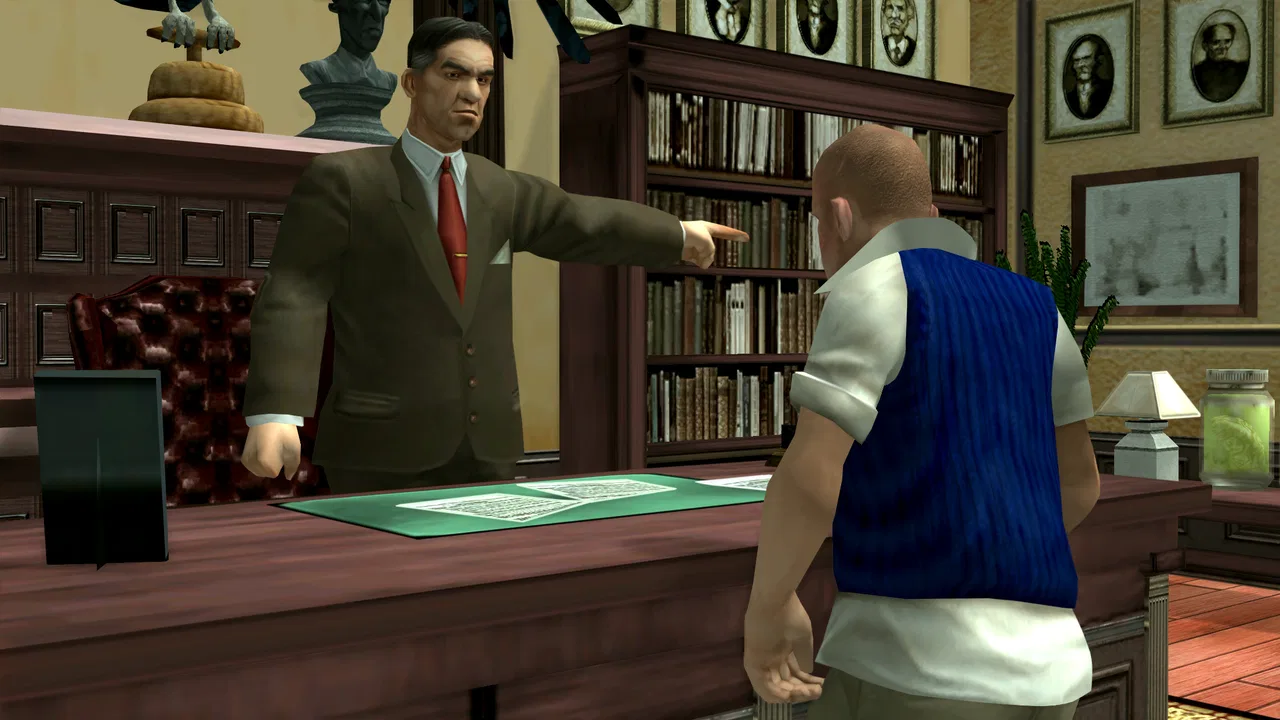
Developed by Rockstar Games, this is an action game built around the life of a rebellious student in a boarding-school setting. The tone mixes comedy, mischief, conflict, and exploration rather than presenting a straightforward battlefield. I liked that change of pace. Instead of moving from one combat arena to another, I spent time travelling around the campus, dealing with school routines, meeting characters, and deciding whether to follow the next objective or wander into a distraction.
You May Also Like

 Blood Strike: 2.5 Anniversary
Blood Strike’s Loadouts Turn Every Drop Into a Tactical Gamble
A close look at Blood Strike’s custom loadouts: how fast access to signature weapons reshapes its battle royale rhythm, rewards preparation, and narrows the gap between fights.

 Pandora - Music & Podcasts
Pandora’s Music Is Easy to Start, but Harder to Recover
Pandora’s strength is its low-effort path from a seed to a station. Its weak spot is how much confidence it asks you to place in connection, setup, and quiet recovery.

 8 Ball Pool
 Is Built on Rivalries, Rematches, and Routine
A close look at the rivalries, rematches, shared routines, and unanswered safety questions that turn a quick pool match into a persistent mobile community.

 Samsung Music
’s Quiet Strength Is Playing What You Already Own
Its reach comes less from spectacle than from dependable access to a personal library. That simplicity is both the app’s strongest retention engine and its ceiling.

 AccuWeather: Weather Radar
AccuWeather Review: A Quick, Clear Forecast for Everyday Decisions
For everyday plans, the best forecast is the one you can understand quickly. AccuWeather makes rain timing, radar, and local conditions easy to act on, with a few trade-offs.

 Hill Climb Racing
Why Hill Climb Racing Still Turns Crashes Into One More Run
A tiny car, a bumpy hill and one more upgrade: Hill Climb Racing keeps resurfacing because its simple chaos makes every near-miss feel personal.
More From Our News Desk



The setting gives the game a personality that many mobile action titles lack. The school is not just a backdrop between missions; it shapes the rhythm of play. Corridors, grounds, classrooms, and nearby areas create a sense of place, while the school schedule adds pressure to some activities. That makes even a short session feel connected to a larger day in the game, although it also means the experience can feel less immediately accessible than an arcade-style action game.
My first useful tip is to resist rushing through the main objectives. The early hours are a good time to learn how movement, camera control, interaction, and combat feel on your device. Mobile controls often require more attention than a physical controller, and trying to play aggressively before becoming comfortable can turn simple encounters into unnecessary frustration. Exploring calmly also helps you understand where you are, which is valuable when a mission sends you across the school grounds.
What makes the mobile version appealing
The biggest advantage is convenience. A game with this kind of single-player structure is easy to pick up when I have a quiet break, then put down when real life interrupts. It does not depend on coordinating with online teammates, so a household does not need several people to be available at the same time. One person can play while another uses the device later, provided both agree on how progress will be handled.
I also appreciate that the game offers more variety than its action label suggests. There are confrontations, but the appeal comes from combining story missions with school activities, movement around the environment, and the unpredictable feeling of getting into trouble. That variety gives the game a more relaxed identity than a pure shooter. If you prefer action games with a strong sense of place and a campaign you can revisit, it has more to offer than its short store description implies.
There is a trade-off, though. The same open-ended structure that makes the world interesting can make a short session feel incomplete. You may begin a task, get distracted by travel or another activity, and stop before reaching a satisfying conclusion. For me, the game is at its best when I can spare enough time to finish a meaningful objective rather than treating it like a two-minute distraction.
Shared-device use: the practical problem is continuity
On a shared phone or tablet, I would treat this as a one-player-at-a-time game. The issue is not that several people cannot enjoy it; it is that the story and progress are easier to follow when one person owns the current run. Before handing over the device, I would finish a mission or reach a safe stopping point, then explain what remains to be done. That small habit avoids the common household problem of someone opening a game and not knowing whether they are supposed to continue, explore, or leave the current objective alone.
It is also worth agreeing on whether the device is available for gaming during schoolwork, meals, or shared activities. The game’s school setting may look familiar to younger players, but the tone includes rebellion, conflict, and mature humour. A parent or guardian should make the decision based on the child, not merely on the fact that the game takes place at school.
For a family that wants a game everyone can jump into without preparation, I would choose a simpler party game or a short arcade experience instead. This one rewards concentration and personal progress. It is a better fit for a household where people can reserve turns and respect the current player’s save than for a device that is constantly passed around.
Setup, device boundaries, and keeping expectations realistic
The game is free to download, with in-app purchases listed at $6.99 per item. That makes the initial decision easy, but I would still talk with anyone sharing the device before purchases are made. A free starting point does not automatically mean a completely cost-free experience, so the person responsible for the account should understand how spending is handled. I would not let a child use a shared payment setup without an adult checking the arrangement first.
The listed minimum operating system is Android 9. That is useful when deciding whether an older household phone is a sensible target. Compatibility alone is not the whole story, because a game with a 3D world and touch controls also needs a device that feels comfortable to hold and responsive enough for movement and camera adjustments. If the phone is already slow in other games, I would test this one before making it the household’s main gaming device.
Screen size changes the experience more than I expected. A larger display gives touch buttons and the game world more breathing room, while a small phone can make the interface feel busy during tense moments. I found that playing with both hands is more practical than trying to operate everything with one thumb. That may sound obvious, but it matters in a shared household because younger or less experienced players may struggle if they assume the game should be played like a simple portrait-mode title.
I also recommend setting a clear stopping routine. Finish the current activity when possible, pause somewhere sensible, and close the game rather than leaving the device in a confusing state. This is especially helpful when several people use the same phone for school, communication, or entertainment. The game is much easier to share when the next person can immediately see that the previous player has finished their turn.
Controls, missions, and the learning curve
The touch interface is the part I had to adapt to most. Movement, camera control, interaction, and action buttons compete for space, and the pressure increases when the game asks for quick reactions. I became more comfortable after slowing down and learning the layout instead of repeatedly blaming the character for my mistakes. That learning period is normal for this kind of mobile port, but it is still a real barrier for anyone expecting instant, console-like precision.
My second practical insight is to separate exploration from difficult missions. When I am simply learning the environment, I can focus on movement and camera control without the pressure of a timer or confrontation. Once I understand the route, I return to the mission with less mental clutter. This approach is particularly useful for a shared device because it lets a less experienced player practise without taking over the main story at a stressful moment.
The mission structure also encourages planning. Some tasks are easier when I pay attention to where I am going and what the game is asking before acting. Charging ahead can create avoidable confusion, especially when the objective involves reaching a location rather than defeating an opponent. I found the game more enjoyable when I treated it as a small open world with rules and routines, not as a sequence of targets that should always be attacked immediately.
That slower rhythm will not suit everyone. If you want instant action, constant rewards, or a clean series of short rounds, a modern arcade game is likely to feel better. This experience asks for patience with its setting and its missions. Its reward is atmosphere and continuity rather than nonstop intensity.
Age, trust, and conversations that should happen first
The content rating is Teen, and I would take that seriously in a household. The school setting does not make the game automatically suitable for every child. The story is built around misbehaviour, confrontations, and a deliberately provocative view of school life. I would preview the tone or play alongside a younger teenager before deciding whether it fits the family’s expectations.
Trust is also important because the game presents opportunities to cause trouble. That is part of the fiction, not a guide to real behaviour, but younger players may still need help separating comic game logic from everyday conduct. A short conversation about the difference between playing a rebellious character and copying that behaviour is more useful than assuming the setting explains itself.
For older teenagers and adults, the rating is less of a concern, but the game can still create household friction if one person dislikes its humour or themes. I would be honest about that before installing it on a communal device. The right question is not only whether the intended player enjoys action games, but whether everyone who regularly sees or uses the device is comfortable with the game’s tone.
The game has an average rating of 3.9 from around 85,000 ratings, while its review count is around 6,000. I read that as a sign of a generally appealing but not universally smooth mobile experience. The controls, age context, and older design style will divide players more than the basic idea of the game does. Its audience is likely to value the setting and campaign enough to accept some friction.
How it compares with familiar mobile action games
Compared with competitive action games, this is far more personal and self-contained. There is no need to wait for a team, learn a changing multiplayer meta, or worry about other players affecting the outcome of a session. That makes it a strong choice for commuting, quiet evenings, or a shared home where people play at different times. The downside is that it does not provide the social energy or endless variety that online competition can offer.
Compared with open-world crime games on mobile, its school setting gives it a more focused identity. The world is smaller in concept, but the school routine and character relationships make it feel distinctive rather than like a reduced version of a city sandbox. I preferred that focus because it gives the story a clear flavour. Someone looking for a huge modern map, realistic simulation, or constant vehicle-based travel may find it limited.
It is also different from casual school-themed games. Those usually simplify the setting into puzzles, management, or quick challenges. Here, the school is the foundation for a broader action adventure with a continuing protagonist and a more involved campaign. That depth is the reason to choose it, but it is also why the game demands more time and attention than a casual alternative.
With more than five million installs, it has clearly reached a substantial mobile audience, but popularity does not remove the need to check whether its older design and touch controls suit you. I would choose it for atmosphere, story, and a self-directed campaign. I would skip it in favour of another title if my priority were smooth competitive play, instant accessibility, or a game designed specifically for very short shared turns.
Small habits that make a big difference
One habit improved my sessions immediately: I stopped starting a mission when I knew I had only a few minutes. The game is more enjoyable when I can give an objective enough attention to understand its route and finish without rushing. For everyday use, I reserve it for a longer break or an evening session and use something else when I need a truly brief distraction.
Another useful approach is to let the least experienced player practise movement before taking on story objectives. In a household, this prevents a child or casual player from feeling that they have ruined someone else’s progress. It also makes coordination easier: one person can explore, another can continue the campaign later, and both understand which kind of session they are having.
Finally, I would keep spending decisions separate from gameplay decisions. Because individual in-app items are priced at $6.99, a household should agree in advance about whether purchases are allowed and who approves them. That conversation is especially important when the game is free to start. The best shared-device arrangement is one where the player knows both the play boundaries and the account boundaries before beginning.
Who should install it, and who should pass
I recommend it to players who enjoy Rockstar Games’ character-driven worlds, single-player action, and settings with a strong identity. It is a good match for an older teenager or adult who can manage touch controls, follow a continuing story, and appreciate missions that are not all solved by running directly toward a target. It also suits households that can give one player uninterrupted turns.
I would be cautious about installing it for a young child, even if the school environment looks familiar. The Teen rating, rebellious themes, and confrontational tone deserve an adult decision. I would also skip it for anyone who wants a gentle educational game, an uncomplicated family activity, or a title that can be understood instantly by every person who picks up the device.
The current version is 1.4.311, and the game was released on Dec 7, 2016. Those details place it in a particular era of mobile gaming: it brings a substantial older-style adventure to a phone, but it does not feel like a game designed around every modern mobile habit. That is not automatically a weakness. In my experience, it is part of the appeal for players who want a complete-feeling campaign rather than a constant stream of brief prompts.
My household verdict is positive with clear conditions. This is best treated as a personal campaign, not a communal button-mashing toy. Give the player time, discuss the Teen rating, keep purchases within the household’s agreed boundaries, and make sure the device can handle comfortable touch play. When those expectations are in place, the school setting, varied activities, and mischievous tone make it a memorable action game for mobile. When they are not, a simpler family-friendly or short-session alternative will probably create less friction.
After spending time with it, I see the free entry point as a useful invitation rather than the main reason to play. The real value is in having a distinctive world to return to and a campaign that rewards familiarity. If that sounds like the kind of experience you want, I think it is worth trying. If your household needs instant shared access, strict age simplicity, or highly polished competitive controls, I would look elsewhere.
FAQs for Bully: Anniversary Edition
01What is Bully: Anniversary Edition, and what platforms is it available on?
Bully: Anniversary Edition is an action-adventure game developed by Rockstar Games. It offers an immersive open-world experience where players navigate a school environment as Jimmy Hopkins, a rebellious student. The game is available on both Android and iOS platforms, allowing mobile users to enjoy this classic title with updated graphics and controls.
02How do the controls work on mobile devices for Bully: Anniversary Edition?
The game features intuitive touch screen controls, optimized for mobile devices. Players can use on-screen buttons for movement, actions, and camera control. Additionally, the game supports external controllers for a more traditional gaming experience. The controls are customizable, allowing players to adjust sensitivity and layout to suit their preferences.
03Does Bully: Anniversary Edition include multiplayer features?
Yes, Bully: Anniversary Edition includes a multiplayer mode called "Friend Challenges." These are competitive mini-games that players can enjoy with friends, testing various skills in head-to-head challenges. It adds a social dimension to the game, enhancing replayability beyond the single-player story mode.
04Are there any additional features or improvements in this edition?
This anniversary edition includes enhanced graphics with better lighting, textures, and character models. It also supports cloud saves, allowing players to continue their progress across different devices. Additionally, the game features new missions, characters, clothing, and classroom mini-games, providing a richer and more comprehensive experience compared to the original.
05What are the system requirements for running Bully: Anniversary Edition on mobile devices?
For Android, the game requires version 8.0 and up with at least 2GB of RAM. For iOS, the game requires version 9.0 or later and is compatible with iPhone, iPad, and iPod touch. It is advisable to have sufficient storage space, as the game’s file size is about 3GB. Ensure your device is updated for optimal performance.
Pros
- Engaging storyline with rich characters.
- High-quality graphics and audio.
- Variety of missions and side activities.
- Intuitive controls for touchscreen devices.
- No in-app purchases needed for full game.
Cons
- Occasional lag on older devices.
- Large file size requires ample storage.
- Some missions can be repetitive.
- Controls may be awkward on smaller screens.
- Limited multiplayer features.

Bully: Anniversary Edition
Gallery